An overflow relief gully is a fitting on the sewer drain outside the house; do not assume every outdoor grate is one. When the sewer blocks, it overflows outside so sewage does not come up inside your house. Keeping it working is the owner's job.
What it is
The overflow relief gully (ORG) is a trapped fitting on your house drain, usually just outside the rear or side wall, with a loose grate on top. Yarra Valley Water describes it as what prevents sewage spilling inside your house.
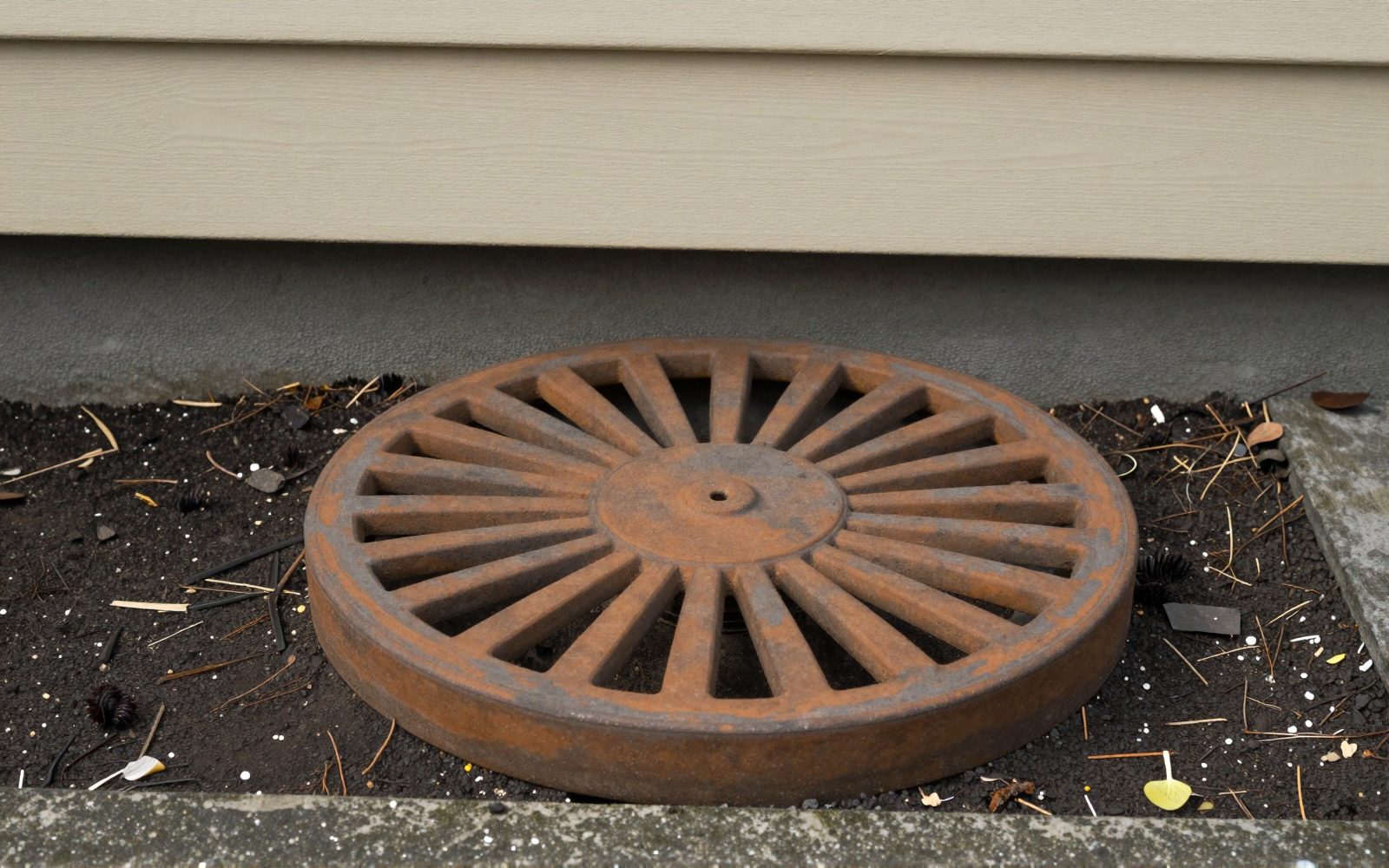
Why it overflows
An overflow can indicate a restriction downstream: in your house drain (tree roots, wipes, fat) or, less often, the main in the street.
Who fixes it
The property owner arranges work on the private fitting. Yarra Valley Water says it is the property owner's responsibility to make sure the overflow relief gully, vents and traps work, and warns a faulty gully may affect an insurance payout after a sewer spill. Never cover it, pave over it or raise the garden above it.
If sewage is overflowing, call your water company first (Yarra Valley Water: 13 27 62, 24 hours). It will tell you whether the blockage is its main or your pipes, in which case you need a licensed plumber.
Who fixes it: You, the owner, with a licensed plumber.
Who to call: A licensed plumber.
Who fixes it: You: the owner must keep it working. It lets sewage spill outside instead of inside.
Who to call: A licensed plumber, or the water company first if sewage is overflowing.
Who fixes it: You: everything from the connection point to the house is your private pipe.
Who to call: A licensed plumber. Ask the water company first if several houses are affected.
Who fixes it: For Yarra Valley Water, responsibility ends at the inspection opening or up to 1 metre inside the boundary, whichever is less. Ask the utility to confirm your connection.
Who to call: Yarra Valley Water faults, 13 27 62, for most of the north and east.
Who fixes it: The water company.
Who to call: Your water company's faults line (13 27 62 for Yarra Valley Water).
Who fixes it: Yarra Valley Water maintains the main-to-meter pipe, stop tap and meter in the usual setup. Internal pipes, private extensions and private mains can be the owner's responsibility.
Who to call: Water company for a meter or street leak; a licensed plumber for your side.
Who fixes it: You, with a licensed plumber; gas units need a licensed gasfitter.
Who to call: A licensed plumber or gasfitter.
From Yarra Valley Water's repair responsibilities, checked 16 October 2026. This drawing is schematic; connection and meter arrangements vary. Check your bill for your utility and confirm the actual repair boundary.
The boundary trap
Many older houses also have a boundary trap or inspection opening near the front fence. Yarra Valley Water says it must stay at surface level so the sewer can be inspected and cleared; if it has been buried, the owner must have a plumber raise it before the water company's crew can clear a blockage.
Common questions
What is an overflow relief gully?
A trapped drain fitting with a loose grate outside the house that lets sewage overflow in the garden instead of inside if the sewer blocks.
Who is responsible for a blocked overflow relief gully?
The property owner. Call the water company first if sewage is overflowing, then a licensed plumber for blockages on your side.
Do not identify a sewer fitting by shape alone
An illustration can explain the purpose of an overflow relief gully, but it cannot identify every fitting around a real house. Stormwater inlets, inspection openings and other grates can look similar to someone unfamiliar with the installation. If you are unsure, ask the water company or plumber to identify the fitting before altering anything.
Keep a simple location record after it is identified. A photograph showing where it sits relative to the house can help a future owner, tenant or tradesperson find it without guessing. Avoid publishing photographs that expose an address or private access details unnecessarily.
A gully's function also depends on its actual installation. Do not use the height of a fitting in a generated illustration as a construction measurement. A licensed plumber needs to assess the real levels and applicable requirements.
If sewage is spilling now
Stop adding wastewater where practical, keep people and pets away and call the relevant water company's faults service. Describe the affected area and fixtures, and follow the response team's instructions. Do not block the overflow opening to make the visible spill disappear; that can redirect the problem elsewhere.
You do not need to establish the final blockage location before reporting an overflow. Tell the service what you can observe safely. If it determines that private plumbing work is required, ask for the explanation and arrange the appropriate licensed practitioner.
For an invented report: “There is wastewater coming from the identified gully beside the rear wall, and the shower is draining slowly.” That communicates two observations. It does not claim that a particular tree or street main caused the incident.
Landscaping and maintenance
Before changing paving or garden levels near a sewer fitting, identify it and ask the plumber how the proposed work affects access and operation. A tidy-looking finished surface is not proof that a buried fitting remains usable.
Keep the location accessible after the work. Do not place a planter, storage box or heavy object over it, and make sure someone maintaining the garden knows its purpose. If the grate is damaged or fixed in place, ask a plumber what repair is needed rather than improvising a sealed cover.
Yarra Valley Water's boundary-trap guidance is a separate access issue: an existing inspection shaft or trap must remain at the required surface level for its crew to use it. If it is buried, the authority may require the owner to arrange a plumber before clearing work can proceed.
After an overflow has been investigated
Keep the incident reference, the explanation of responsibility, the plumber's findings and any proposed follow-up together. A cleared blockage does not necessarily resolve a damaged pipe or recurring cause. Ask what was established and what remains uncertain.
If you rent, report the incident and findings to the owner or managing agent through the property's normal process. An ownership diagram does not determine a tenant's individual payment liability. The practical first step is to report the hazard and preserve the relevant records.
Sources
- Yarra Valley Water, Repair responsibilities
- Yarra Valley Water, Report a fault
- Yarra Valley Water, Residential Customer Charter (connection points)
Checked 16 October 2026. Rules and prices change; check with the regulator, your water company or a licensed plumber.