hipages' July 2026 national guide lists water-heater replacement at $1,200 to $2,500 or more. Treat that as a broad published range and obtain a complete local quote. Victorian end-of-life gas replacement rules change from 1 March 2027, with applicability and exemptions to check.
What it costs
| Job | Published guide range | Source |
|---|---|---|
| Water heater replacement | $1,200 to $2,500+ | hipages, 2026 |
| Solar hot water installed | $3,000 to $7,000+ | hipages, 2026 |
| Plumber's hourly rate, Melbourne | about $80 to $160 | hipages, 2026 |
Ranges, not quotes. Get two or three written quotes, and ask whether removal of the old unit is included.
The 2027 rule for gas
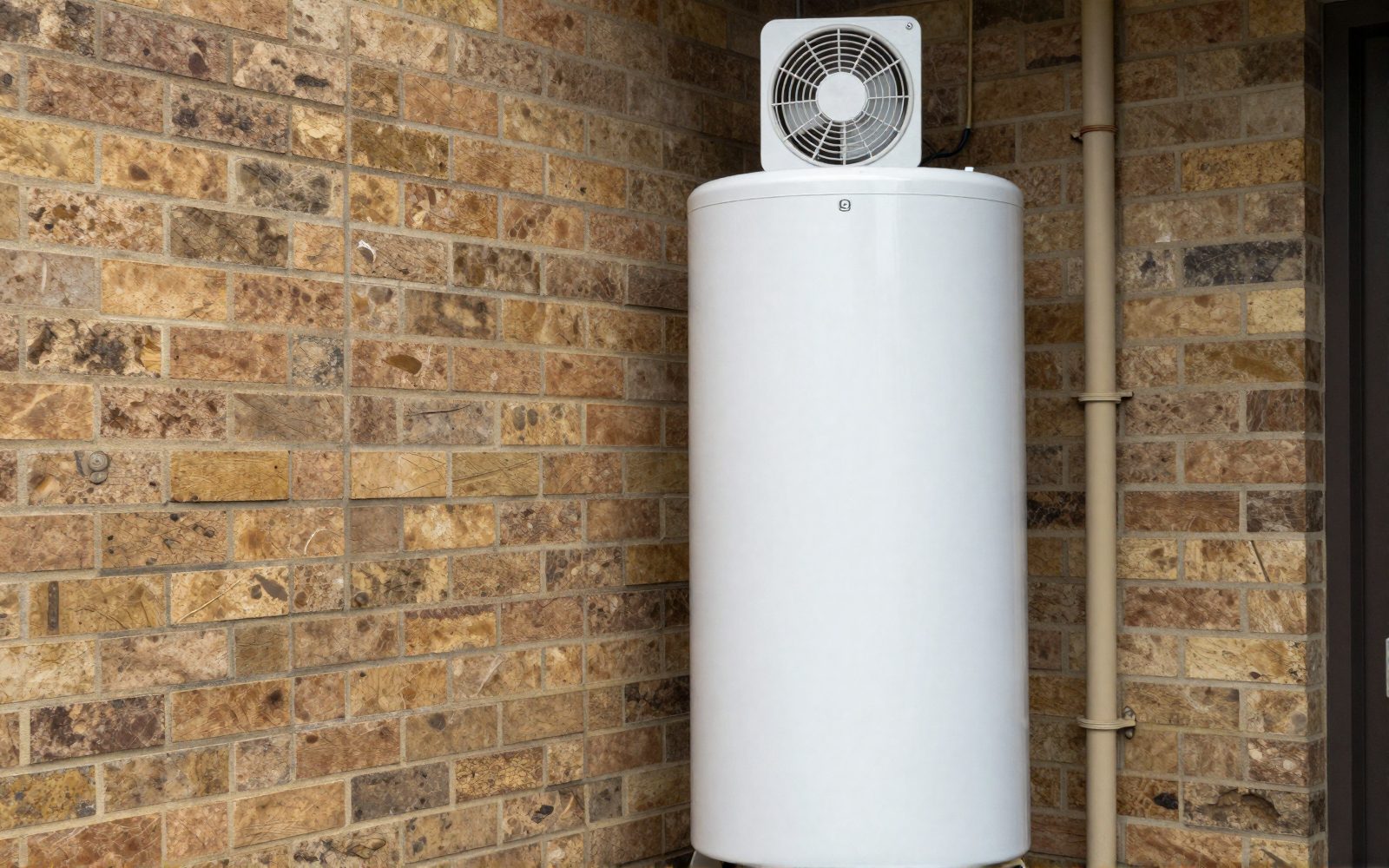
Solar Victoria says that from 1 March 2027, existing homes must replace gas hot water systems with an efficient electric alternative, such as a heat pump, when they reach the end of their life. The Victorian Government identifies exemptions where compliance is impractical or costly; check the current standards and property-specific requirements with the installer.
The rebate
Solar Victoria pays a rebate of up to $1,000 on an eligible heat pump or solar hot water system, or up to $1,400 for an eligible locally made product: 50 per cent of the price after other discounts. From 1 July 2026 your combined household income must be less than $150,000 per year. Full rules: hot water rebate Victoria.
Running costs
Running costs depend on the product, household demand, tariffs and installation. Compare assumptions on the same basis; a projected saving is separate from the upfront quote and does not guarantee a particular household's bill.
Common questions
How much does it cost to replace a hot water system?
hipages' July 2026 national guide lists $1,200 to $2,500 or more for water-heater replacement. Product, site work and incentives vary; obtain a current itemised local quote.
Can I replace my gas hot water with gas in 2027?
Official guidance introduces efficient electric replacement at end-of-life from 1 March 2027. Check the current applicability and exemptions for the actual property with the installer before committing.
Plumber or electrician to replace hot water?
A licensed plumber, and a licensed gasfitter for gas units. Electric units may also need an electrician for the wiring.
A published range is a starting point, not your installation price
The table quotes a named publisher's national guide and its Melbourne hourly-rate estimate. It is not a dataset of this site's completed projects or a fixed offer from a local installer. A complete replacement can involve a different product, capacity, access arrangement and associated work from the example behind a broad range.
Use the figures to prepare questions, then obtain a written quote for the actual property. Ask whether the price covers the product alone or the installation scope, whether GST is included and which items remain provisional. An amount followed by “from” should have a clear explanation of what qualifies for that starting price.
For an invented comparison, two advertisements might both promote a low replacement price while one includes removal and the other excludes it. They cannot be compared meaningfully until the full scope is clear. A lower headline is not necessarily a lower final customer contribution.
Like-for-like replacement and a system change
Replacing a unit with a similar type can involve different work from moving to a heat pump or another arrangement. The site still needs assessment: the existing connections, installation location, access, required controls and any electrical or gas work matter.
Ask the installer to identify what can remain and what must change. A product fitting into the same physical space does not establish that every connection or component is suitable. Likewise, a larger capacity does not prove that the system is appropriately sized for the household's actual pattern of use.
If changing system type, ask how the proposal deals with placement, airflow or clearances where relevant, drainage, noise, electrical requirements and the manufacturer's instructions. Get answers for the actual product rather than assuming a generic heat-pump description covers every model.
What a complete quote should identify
The quote should name the exact product and capacity, the work included, removal of the existing unit, associated trades, relevant site work and exclusions. Ask which items depend on inspection or a later decision. Keep an unconfirmed item visible instead of treating it as included because it was discussed verbally.
For a hypothetical job, access might require extra handling or a change in installation location. Ask who assesses that work, whether it is priced and who makes good any affected surface. The system price and the cost of completing the site are different parts of the comparison.
Keep the agreed scope and any subsequent variation together. If a different product is proposed on installation day, ask for the revised model, scope, price and incentive treatment before assuming the original quote still applies. Similar capacity does not make two products identical.
Separate the product, installation and incentives
A useful worksheet starts with the full quoted amount, then identifies each confirmed reduction and the amount remaining for the customer. Keep the eligible product amount separate where a program's calculation requires it. Do not treat the whole invoice as automatically eligible for every incentive.
Here is an invented arithmetic example, not a retailer quote or a promise of eligibility. Suppose a complete job is quoted at $4,000, comprising a $2,500 product and $1,500 installation. A confirmed $500 product discount leaves a $2,000 product amount for the rebate calculation. A hypothetical 50% rebate capped at $1,000 would then be $1,000, leaving $2,500 payable on the whole job.
The example explains why the calculation order and scope matter. The actual Solar Victoria rules, approved product and household eligibility still determine a real application. A maximum advertised rebate does not establish what a particular customer receives.
Check the Victorian rebate before committing
The hot-water rebate guide separates the income and property conditions, product category, authorised retailer and application sequence. Check each relevant condition through Solar Victoria's current information rather than relying on a logo in an advertisement.
For a planned replacement, ask the retailer how it handles eligibility confirmation and the program's instructions about accepting quotes and deposits. If the system has failed urgently, use the program's specific emergency-installation process. Emergency timing does not remove the eligibility requirements or guarantee payment.
If a quote assumes several incentives, ask which are confirmed, which are conditional and what you would pay if an application is refused. Keep that explanation in writing. It is a more useful comparison than adding the highest advertised amounts from unrelated promotions.
A replacement planned around March 2027
The Victorian Government's published standards introduce efficient electric replacement of gas hot-water systems at end-of-life from 1 March 2027. The official guidance also identifies exemptions. Ask the installer to confirm how the current requirements apply to the property and proposed work.
A repair, a voluntary replacement and replacement at end-of-life are different descriptions. The applicable rule needs to be considered against the actual circumstances, rather than choosing an answer from the date alone. Use the official guidance linked above and obtain the appropriate property-specific explanation.
Do not keep operating an unsafe system merely to reach a preferred calendar date or funding round. An immediate hazard requires the proper response. The installation plan and any incentive application can then be handled through the relevant authorised process.
Running cost and purchase price answer different questions
The upfront amount pays for the product and installation scope. Future energy cost depends on use, tariffs, product performance and installation. A low purchase price does not establish a low running cost, and a projected saving does not establish that every household will achieve it.
When comparing projections, ask which household demand, energy tariff, operating schedule and product assumptions were used. Use the same assumptions across alternatives. A comparison using different demand or tariffs can make the difference look like a product effect when the inputs changed too.
For an invented household, a change in the number or timing of showers can affect demand independently of the new heater. Record the existing pattern when discussing capacity and operating cost. This guide does not calculate a guaranteed payback period for a home it has not assessed.
Warranty, service and the installed product
Ask which warranty covers the product, which responsibilities relate to installation work and whom to contact for each kind of concern. Keep the actual model, serial information, invoice and relevant completion documents together.
Check the manufacturer's maintenance instructions and ask which tasks are for the owner and which need a service provider. A warranty period is not a promise that every fault, service charge or installation condition will be covered. The terms and the cause of a later problem matter.
If the proposed product changes, recheck these details as well as the price. A substitute can have a different service arrangement, maintenance requirement or program category even when its headline capacity appears similar.
Compare quotes with the same boundaries
Place the offers beside the same list: product and capacity, installation work, associated trades, removal, access, relevant approvals or documents, confirmed incentives, exclusions and total customer contribution. Mark unknowns clearly and ask each provider to explain them.
A quote for product supply only is not an alternative to a complete installed offer until the remaining work is priced. Similarly, a fixed amount for a defined scope is different from an estimate that can change after inspection. Ask what would trigger a variation and how approval is obtained.
Keep the comparison focused on the actual outcome needed: a suitable, compliant working system and a clear understanding of the price. The lowest isolated line item does not establish that outcome, and the highest quote does not prove better work without an explanation of the scope.
Completion and a usable handover
Ask the practitioner to demonstrate normal operation and explain the owner controls without opening equipment. Confirm where the model instructions are kept, what maintenance applies and whom to contact if a fault appears.
Retain relevant plumbing and electrical completion documents, the final invoice, warranty information and any incentive correspondence. The compliance-certificate guide explains the Victorian plumbing recordkeeping questions. Different work can involve different documents, so ask about the actual job rather than assuming one certificate covers everything.
If the final amount or product differs from the accepted quote, obtain the explanation and supporting record. A complete handover gives the household a working system and enough information to use and maintain it appropriately; it is more than delivery of a new tank.
Sources
- hipages, How much does a plumber cost? (water heater replacement, updated 24 July 2026)
- Solar Victoria, Hot water rebate
- Victorian Government, Electrification and efficiency standards for buildings, checked 16 October 2026
- Solar Victoria, Choosing the right hot water system
Checked 16 October 2026. Rules and prices change; check with the regulator, your water company or a licensed plumber.